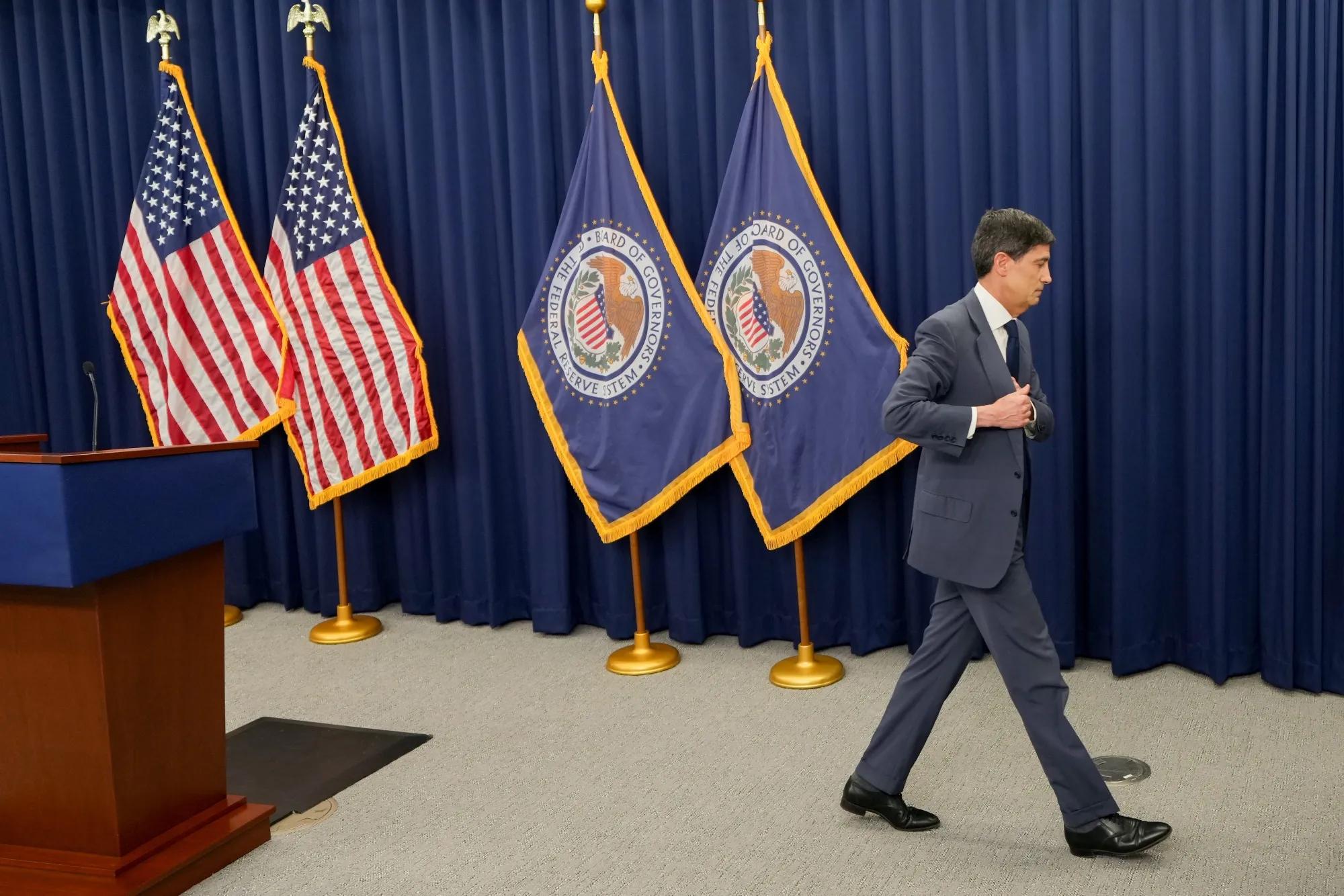
Fed June minutes showed several policymakers leaning toward a rate hike, and September hike odds jumped to roughly 70%. The curve responded by flattening, short rates up, long rates down, a textbook setup for cheaper long-term financing to newly justify AI infrastructure projects sitting near their hurdle rate. That logic points toward equipment suppliers like Eaton and Caterpillar as second-order beneficiaries.
The mechanism doesn't survive contact with how frontier labs are actually financing capacity. Anthropic locked in a $100 billion, 10-year AWS compute commitment in April, layered a further $200 billion Google Cloud deal on top, and is paying xAI $1.25 billion monthly for additional compute, while running roughly $19 billion in annualized revenue against that spend. CoreWeave is carrying $25 billion in debt at 11% interest to keep building. None of these are the actions of buyers waiting on a better discount rate; they're the actions of buyers who'd rather overpay for capacity than risk a rival locking it up first. Meta's own $9.1 billion Canadian build fits the same pattern.
The assumption that would kill this conclusion: if capex committees prove more rate-sensitive than compute-scarcity behavior suggests, testable by checking whether the gap between financing decisions and public project announcements historically compresses when long rates fall.
Prediction: watch whether AI lab capex commitments soften if enterprise revenue disappoints in Q3-Q4 2026 earnings; that gap closing (or widening) will move suppliers far more than the Fed's next hike.
In AI infrastructure specifically, capacity gets priced off revenue backlog and lease obligations locked years out . The variable actually worth pricing iis whether AI revenue catches up to deployed capacity before the debt comes due.