The Household Digital Divide AI Is Building
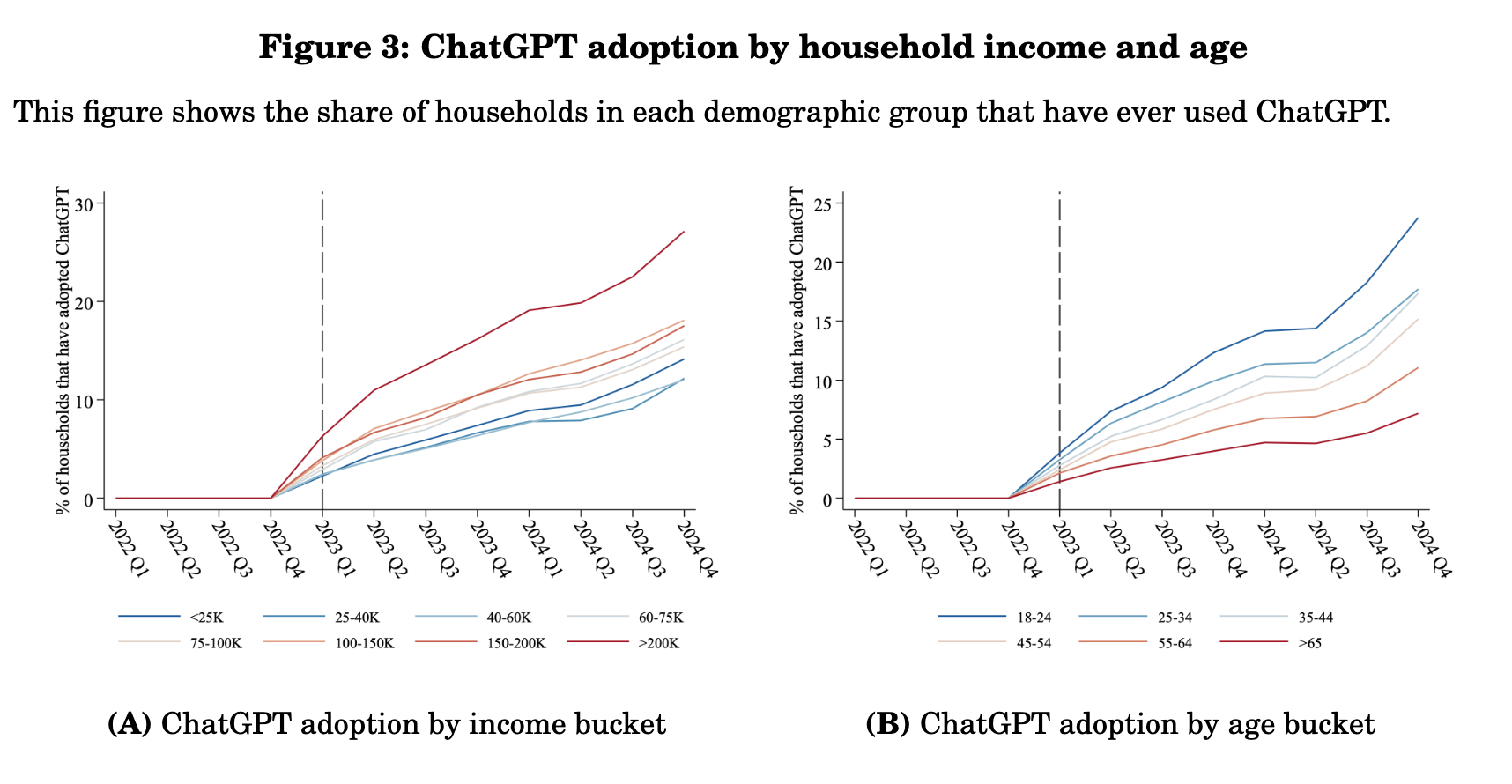
One-third of Americans now use generative AI outside work. Only one-quarter use it at work.
The productivity story we've been telling has the wrong address.
New research tracking 200,000+ US household devices - actual browsing behavior, not survey self-reports - reveals how the efficiency gains actually work. Households use ChatGPT for productive tasks: fixing a leaking faucet that once meant 20-30 minutes across YouTube tutorials and plumbing forums now takes under two minutes. Tax prep, college applications, medical research, consumer decisions - all compress. The measured efficiency gains range from 76% to 176% (yes, really…).
What I find most surprising is that productive browsing time stays flat. The freed time flows directly into leisure: among adopters, leisure browsing roughly quadruples. AI isn't making households work harder at home. It's giving them their evenings back.
But the distribution is brutal.
By Q4 2024, households earning over $200K hit 28% adoption. Those under $25K: 12%. Ages 18-24 reached 25%; over 65, just 5%. At the same time, the slopes are actively diverging.
This could mean a Palo Alto engineer using ChatGPT for quarterly taxes and college essays accumulates leisure dividends across every domain while a warehouse worker in rural Ohio who never accesses either gains nothing, and keeps falling further behind on the tools that were supposed to level the playing field.
The policy implication: technology literacy efforts and subsidies need to reach older and lower-income households now, before these diverging curves become permanent stratification.