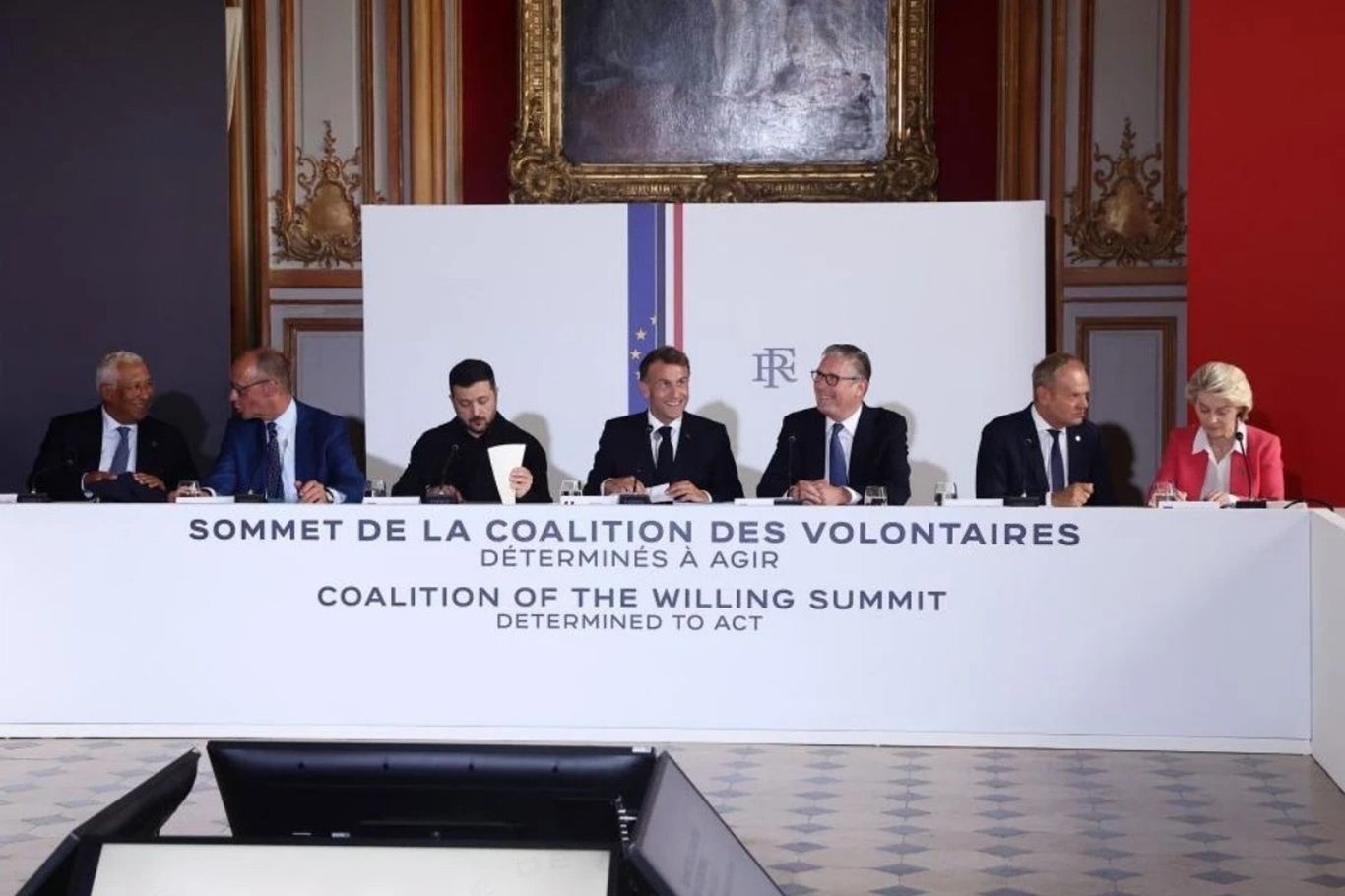
The obvious take on Europe's new missile-defense coalition writes itself: any rare-earth demand shock funnels back to Chinese miners and processors, who control separation of the dysprosium and terbium inside every high-performance magnet. True, but not the trade, as that exposure is already priced, and it says nothing about who's forced to change behavior within Europe.
FREYJA's guidance actuators and the Bliksem EXO consortium (Thales, Airbus, Destinus, MBDA, Safran) need the exact same heavy-rare-earth magnets as premium EV motors and offshore wind turbines. Once the coalition converts its declaration into funded contracts, its primes become price-insensitive, government-backed buyers competing for separated dysprosium/terbium against Europe's own civilian manufacturers against each other's supply chain.
That reframes the losers: not "Europe versus China" but European civilian industry versus European defense industry, fighting over the same scarce input. The exposed segment is narrow (e.g., premium EV traction motors and direct-drive wind), which has not yet substituted toward low-dysprosium designs. As a result, production simply not be happening, with some of that lost output migrating to non-European rivals who secured supply first.
The genuine beneficiaries other than the Chinese processors are the five named primes, plus non-Chinese refiners like MP Materials and Lynas if the coalition explicitly builds around de-risking from China. That's a real, investable divergence the "China wins" framing erases entirely. However, the investment window may be closing: rare-earth analysts already watch this supply chain closely; the FREYJA-specific connection closes fast once public.
Prediction: If a funded governance mechanism emerges within 3-6 months, expect a European (not Chinese) rare-earth processor to announce a defense-linked offtake agreement before any civilian manufacturer publicly flags sourcing constraints - inverting the usual sequence.